
The Role and Importance of Microwave Absorbing Materials in the AI Era
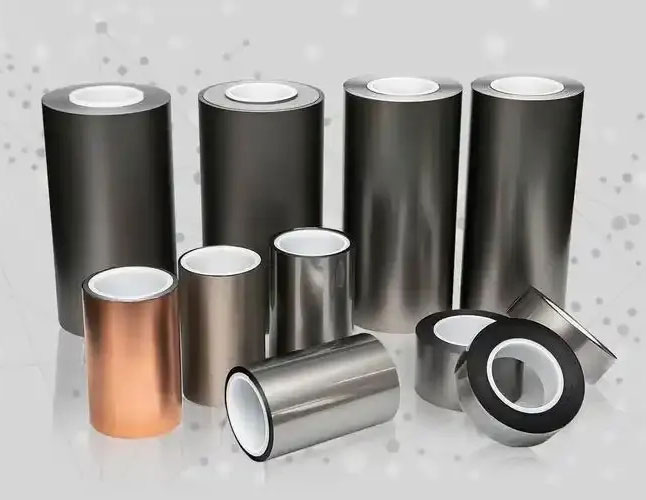
In the era of artificial intelligence (AI), microwave absorbing materials (MAMs) have emerged as crucial components, playing a significant role in enhancing the performance and stability of electronic devices. As AI applications expand, the demand for efficient electromagnetic wave management grows, making MAMs indispensable.
MAMs are materials capable of absorbing, weakening, or interfering with electromagnetic wave energy. They convert electromagnetic wave energy into other forms, such as thermal energy, thereby reducing reflections and radiation. These materials can be broadly classified into three types: magnetic loss, dielectric loss, and resistive loss materials.
Classification and Characteristics
1. Magnetic Loss Materials: These rely on magnetic loss mechanisms to absorb electromagnetic waves. Common absorbents include soft magnetic alloys, ferrites, and ultrafine soft magnetic metal powders.
2. Dielectric Loss Materials: These absorb waves through dielectric polarization relaxation. Examples include barium titanate ferroelectric ceramics, silicon nitride, and iron nitride.
3. Resistive Loss Materials: These interact with electric fields to absorb waves. Typical absorbents include carbon black, silicon carbide, conductive graphite, and metal short fibers.
Applications in AI Products
1. Optical Modules: In high-speed optical communication systems, MAMs like HiGel6000RC and ABS-20LV ensure stable temperatures and minimize electromagnetic interference (EMI), crucial for maintaining optimal performance.
2. Electronic Devices: Laird's SNN55RXP and similar materials reduce EMI in AI-powered electronics, enhancing electromagnetic compatibility (EMC) and operational efficiency.
3. Aerospace: In aircraft and spacecraft, MAMs like the WAVE-VECTOR™ HA series lower noise and improve stealth capabilities.
Choosing the Right MAM
When selecting MAMs, consider:
Absorption Capability: Assess reflection, transmission, and absorption rates to ensure effective wave management.
Mechanical Strength and Durability: Ensure the material can withstand various environments.
Temperature Stability: The material must perform consistently across different temperature ranges.
Cost: Balance performance with budget, especially for large-scale applications.
Conclusion
In the AI era, MAMs are vital for optimizing electromagnetic performance in electronic devices. Their ability to manage electromagnetic waves enhances device stability, reduces interference, and supports advanced communication technologies. As AI continues to evolve, the demand for high-performance MAMs will grow, driving innovation and research in this field. By understanding the classification, characteristics, and applications of MAMs, engineers can select the most suitable materials to meet the challenges of the AI era.
 PORON Foam vs Rogers Foam: Tec
 How to Choose Thermally Conduc
 Technical Parameter Comparison
 PET Mylar Sheet and Mylar Pape